{“opportunity”: false, “reason”: “The post is about choosing a healthcare career path, not about donating, comparing charities, tax receipts, effective altruism, disaster relief, personal finance for giving, ESG investing, or impact-focused careers.”}
SINGER® Super Bundle, Heavy Duty 500 Sewing Machine with Carrying Case
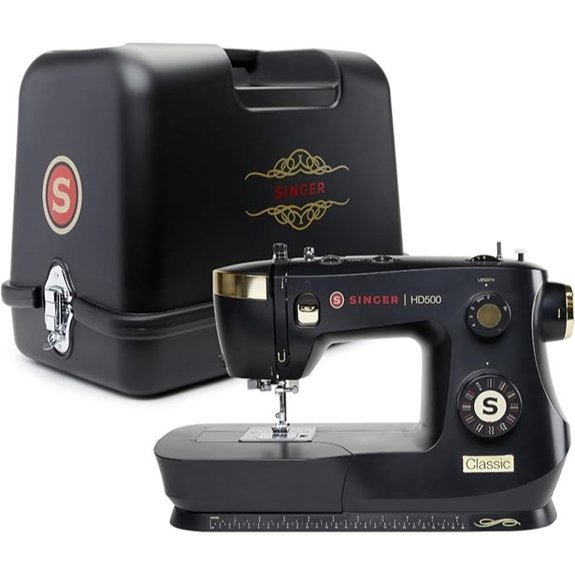
If you’re tackling leather, denim, or multiple layers of upholstery fabric, the SINGER® Super Bundle, Heavy Duty 500 Sewing Machine with Carrying Case is your best bet. Its sturdy metal frame and robust motor punch through tough materials with ease, so you get consistent stitches every time. You’ve got 23 built-in stitches for utility, stretch, and decorative work, plus a one-step buttonhole. The built-in needle threader and drop-in bobbin save you hassle. And the hard carrying case keeps everything safe. This machine isn’t just powerful; it’s portable.
BEAMNOVA Leather Stitching Machine, Cobbler Sewing Shoe Repair Tool
https://m.media-amazon.com/images/I/71-1yZuQmRL._AC_SX679_.jpg
This heavy duty cobbler is your best bet for shoe repair and leather crafting. It’s a hand operated, free standing machine with a tripod stand, so you don’t need a workbench. The open arm design lets you sew narrow spots, like boot edges or bag corners. You’ll handle leather, canvas, cotton, or rubber with ease using nylon or silk thread. It comes ready to use, with 10 needles and a coil of thread included. You get a smooth turntable and precision bobbin for manual control, perfect for detailed repairs.
soft-shaded-moe-style] 1girl, single character, full body, looking at viewer, anime style, simple background, white background
https://m.media-amazon.com/images/I/71eDugHqjuL._AC_SX679_.jpg
You want a versatile hand sewing machine for heavy duty repairs on shoes, bags, and leather items. That’s exactly what this upgraded Version 10 delivers, though it’s not your typical sleek gadget. Nope, this one’s handmade by a master blacksmith, so expect a few charming knock marks that shout artisanal character. Built tough with nylon, it measures about 19 inches deep, 13 wide, and 6 tall, so it’ll claim a solid spot on your workbench. Pick between green or silver, then get ready to tackle up to 0.48 inches of thickness.
The magic? Ten interchangeable axes let you switch tasks on the fly for repairs on clothes, quilts, coats, or trousers. Upgraded bearings and a refined main shaft cut friction, making each stitch buttery smooth without jamming. Need more speed? Add the optional motor, and you’ve got a manual workhorse that keeps up with your pace. Just remember, nylon thread pairs best with this one, perfect for mending that favorite bag or patching denim. With solid 3.8-star feedback from 279 users, it’s a no-nonsense choice for crafters who value function over frills.
stream”: null,
“city”: null,
“state”: null,
“area”: null,
“college_name”: null
https://m.media-amazon.com/images/I/71B-BuaoUiL._AC_SX679_.jpg
SINGER Heavy Duty 4432 is your best pick for tackling thick leather without breaking the bank. You’ll love its powerful motor that punches through multiple layers effortlessly, sewing up to 1,100 stitches per minute. That speed saves you time on big projects like bags or belts.
It comes with 110 stitch options, so you can switch from basic seams to decorative touches. The full metal frame keeps everything stable, no wobbling when you’re pushing through tough material.
Check out what’s included:
- General Purpose Foot, Zipper Foot, Buttonhole Foot
- Button Sewing Foot, Edge/Quilting Guide
- Needles, bobbins, spool caps, and a seam ripper
A jam-proof drop-in bobbin lets you monitor thread easily. Some users miss a printed manual, but the free app has all the tutorials you need. At 14.6 pounds, it’s solid but portable. Rated 4.3 stars with 679 reviews, you’re getting proven performance for leather work. No nonsense, just reliable stitching.
Treadle Sewing Machine Belt 72″ Leather with Hook
https://m.media-amazon.com/images/I/71VQzux2wXL._AC_SX679_.jpg
For hand-sewing thicker materials like leather or canvas, a 72-inch treadle belt with a metal hook is your best choice if you own an antique or modern treadle machine. This leather belt replaces worn-out rubber, giving you that smooth, foot-powered control you need for heavy layers. The metal hook makes installation a breeze, no special tools required.
You’ll want to measure your machine’s flywheel and handwheel distance before ordering, though. The belt’s 72-inch length suits most standard treadles, but double-check to avoid a slack or tight fit. To keep it supple, rub a bit of neatsfoot oil into the leather every few months. That’s it. Install it, adjust the tension, and you’re ready to stitch through that tough hide.
stream”: null,
“city”: null,
“state”: null,
“area”: null,
“college_name”: null
https://m.media-amazon.com/images/I/61tPXs8Y8aL._AC_SX679_.jpg
The New Cobbler Machine 10 is a top pick if you want a simple, durable tool for hand-stitching leather. This hand-operated machine focuses on shoe repair and mending, but it also handles bags, clothes, quilts, and coats. Its iron construction, coated with anti-rust oil, guarantees longevity, while the lightweight aluminum alloy tripod keeps it portable. You’ll need to refuel the active parts for smooth, quiet operation. Assembly is straightforward, and the machine ships pre-tested on leather. At roughly 21cm deep, 13cm wide, and 6cm tall, it’s compact for manual work. Plus, it comes with warranty support and easy returns.
stream”: null,
“city”: null,
“state”: null,
“area”: null,
“college_name”: null
https://m.media-amazon.com/images/I/61bW5-R0A3L._AC_SX679_.jpg
This machine is your best bet if you’re repairing shoes or gear by hand. It’s a manual workhorse, cobbling together leather, rubber, cloth, or synthetics with nylon or cotton thread. You can adjust the stitch length up to 6mm with a simple screw, and its foot rotates a full 360 degrees so you can sew in any direction without repositioning the material.
Key specs you’ll appreciate:
- Weight: 20 pounds, sturdy metal build
- Dimensions: 11 x 7 x 3.1 inches
- Operation: Crank it with minimal shaking to avoid knotting
The bobbin winding system and outward-facing needle groove prevent line snags. Assembly is straightforward, but don’t be alarmed by an optional oil coating on arrival; it’s there for protection. Rated around 3.6 stars, it’s a solid, no-nonsense tool for shoes, bags, and raincoats.
stream”: null,
“city”: null,
“state”: null,
“area”: null,
“college_name”: null
https://m.media-amazon.com/images/I/61ELmlURqBL._AC_SX679_.jpg
You need a machine that won’t flinch when you hit that triple-layer leather stack, and VEVOR’s JK9808 delivers exactly that. Its 550W servo motor hums along at 5000 stitches per minute, chewing through 10 layers of denim or thick hides without hesitation. The sturdy metal frame and aluminum components mean it’s built to last, weighing in at a solid 130 pounds. Auto lubrication keeps things running smoothly, and that LCD panel lets you dial in speed, needle position, and a soft start. You’ll appreciate the fine needle positioning for precision work, plus the 0.3″ presser foot lift and 0.5″ knee lifter for easy fabric handling. One-touch reverse stitching makes seam reinforcement simple, and the LED light keeps your workspace bright. The adjustable table ranges from 22.4″ to 29.1″, so you’ll find a comfortable height. Great for garments, auto interiors, tents, and bags. Just watch that oil window for maintenance. A true workhorse for your shop.
Factors to Consider When Choosing Sewing Machines for Leather
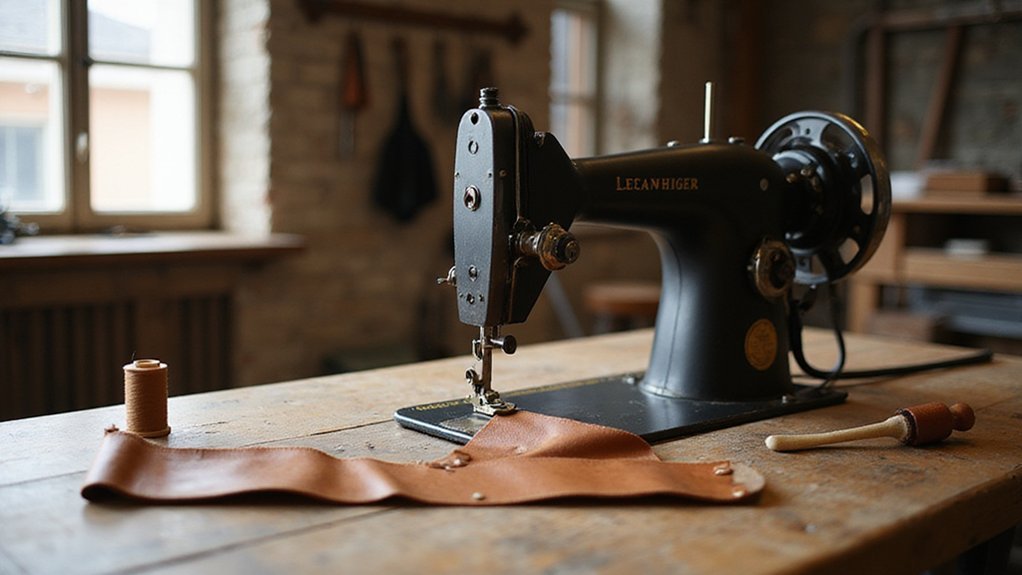
When you’re picking a sewing machine for leather, you need to weigh machine stitch speed against the needle’s raw piercing power, since thick hides demand that extra punch. Your project’s fabric thickness limit will also steer you, and you can’t ignore the frame and build quality, because a flimsy machine won’t last. Plus, the motor type and power directly affect how smoothly you’ll cut through tough material, so choose wisely.
Machine Stitch Speed
Why settle for a crawl when your leather project could be racing along at 1,100 stitches per minute? That speed slashes your sewing time and boosts productivity fast. For heavy duty work, you need a machine that holds high speed without hiccups, ensuring every stitch lands clean and consistent. Most machines let you dial the speed back for precision on tricky curves or seams. But here’s the catch: extreme speeds demand robust motor power and stability, or you’ll risk irregular stitches and motor strain. Balance that raw pace with control features like:
- Adjustable needle position for fine tuning
- Manual speed overrides for intricate sections
A fast machine is useless if you can’t tame it. Opt for one that lets you shift gears smoothly, from a careful crawl to a confident gallop. That way, you’re not just fast; you’re smart.
Needle Piercing Power
Since leather won’t yield like fabric, your machine’s needle piercing power becomes non negotiable. You need a motor that punches through dense hides without flinching, or you’ll face skipped stitches and bent needles fast. Look for heavy-duty machines that drive the needle with real force; they handle multiple layers effortlessly, keeping your seams clean and even. Adjustable pressure settings are your best friend here, letting you dial in the exact force for softer lambskin versus rigid veg-tan. That customization prevents crushed fibers and broken needles, saving you headaches mid-project. A machine with strong piercing power also reduces hand-cranking frustration, so you’ll push through tricky spots smoothly. Don’t settle for a flimsy motor—check specs for high wattage and reinforced internals. Choose wisely, and your leather projects will feel like a dream instead of a battle.
Fabric Thickness Limit
Before you commit to a machine, you need to measure its fabric thickness limit, because this single spec decides whether you’ll be cruising through projects or snapping components on the first pass. Aim for a maximum sewing thickness of at least half an inch; anything less simply won’t cut it for stacked leather seams. Check that motor power, too. A heavy-duty motor isn’t a luxury here; it’s what keeps your stitches consistent when you’re feeding dense hide through the feed dogs. You’ll also want to verify needle capacity since bigger sizes prevent breakage on tough material. And don’t overlook the presser foot adjustment. You need that control to dial in pressure, avoiding puckered seams on varying thicknesses. Ultimately, confirm the machine’s internal gearing and metal frame, as these handle the strain without complaining. Match those specs, and you’re set for success.
Frame & Build Quality
Frame and build quality are where the rubber meets the road, because a flimsy machine will fight you every step of the way on leather. You need a sturdy, metal frame for the durability and stability thick hides demand. High quality construction materials, like hardened steel or aluminum alloys, guarantee the machine holds up under heavy use without deforming. A well assembled build minimizes vibrations, giving you cleaner stitches and better control. This solid foundation also maintains consistent tension and stitch uniformity across all your leather projects.
Look for these key indicators:
- Metal frame over plastic: It won’t flex or break.
- Precision components: They resist wear and tear.
- Rigid construction: Less movement means more accuracy.
Don’t compromise here. A robust build isn’t a luxury, it’s a necessity for leather that handles like a dream.
Motor Type & Power
Once you’ve locked in a solid frame, your next big decision is the motor. You’ve got two basic types: mechanical, which relies on a foot pedal for speed control, or electric, which offers more precision. For leather, go electric with serious horsepower. A powerful motor, measured in watts or amps, gives you the piercing strength to punch through thick hides without stalling. Motor speed, listed in stitches per minute (SPM), also matters. Higher SPM lets you glide through dense material without skipped stitches. Look for a heavy-duty direct drive system; it delivers consistent power and runs cooler and quieter during long sessions. Excessive noise or heat? That’s a red flag for durability. Don’t settle for a wimpy motor. It’s the heart of your leather work, so pick one that can handle the tough stuff!
Thread & Bobbin System
Because your motor’s power means nothing if your thread keeps snapping mid stitch, you’ve got to pay close attention to the thread and bobbin system. A reliable setup keeps tension consistent, and that’s non-negotiable with dense leather. Look for machines sporting larger, specialized bobbins—they hold thicker threads, so you’re not reloading every few minutes. That’s a real time-saver.
Your bobbin case needs to be jam-resistant and easy to access; otherwise, you’ll fight it mid-project. And check thread compatibility—nylon, silk, or cotton each behave differently, so match them to your bobbin’s specs for durable stitches.
Precise tension control on both upper thread and bobbin? That’s your ticket to clean, professional seams. Adjust it right, and you’ll avoid puckering entirely. Short version: don’t skip this factor, or you’ll regret it on your first leather piece.