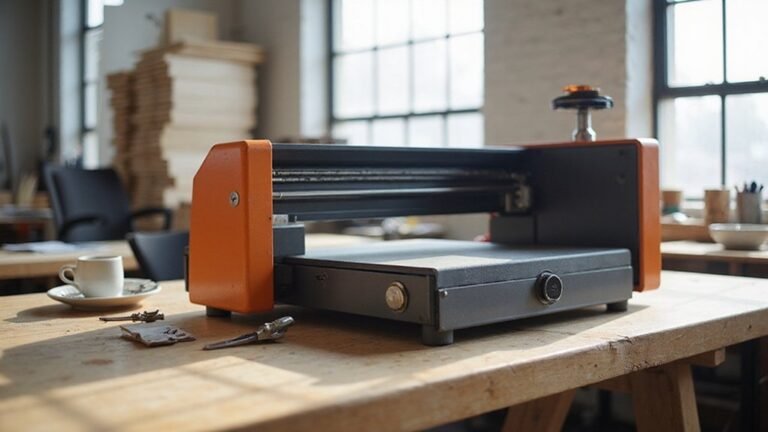
You need a sewing machine that punches through thick hat patches without jamming or snapping a needle. The three machines here do exactly that. One handles leather and dense embroidery with a rotating presser foot. Another lets you adjust needle positions for layered patches. And the third gives you manual control over tough rubber and canvas. But which one matches your specific project?
| Leather Patcher Sewing Machine for Shoe Repair #2972B |  | Best for Durability | Intended Material: Leather, rubber, plastic, canvas | Operation Type: Manual hand crank | Maximum Sewing Thickness: Not specified | VIEW LATEST PRICE | Read Our Analysis |
| Manual Leather Sewing Machine for Shoe Repair |  | Best Value | Intended Material: Leather, rubber, cloth | Operation Type: Manual hand crank with foot turning | Maximum Sewing Thickness: Up to 6mm stitch length adjustable | VIEW LATEST PRICE | Read Our Analysis |
| Shoe Repair Hand Sewing Machine with Nylon Line |  | Most Upgraded | Intended Material: Shoes, bags, clothes, quilts, coats, trousers | Operation Type: Manual operation | Maximum Sewing Thickness: 0.48 inches (approx. 12.2 mm) | VIEW LATEST PRICE | Read Our Analysis |
More Details on Our Top Picks
Leather Patcher Sewing Machine for Shoe Repair #2972B
If you’re patching hats with stiff, heavy materials, this hand crank workhorse keeps up without breaking a sweat. It’s the Leather Patcher Sewing Machine model EW-243, a single needle device built for DIY repairs on shoes, boots, and cylindrical goods. You’ll appreciate that 360-degree rotating presser foot, letting you stitch back-and-forth or side-to-side without repositioning your work. It handles thick leather, rubber, or canvas like a dream. You can use nylon, polyester, or cotton threads, and pick between two shuttle sizes for your project. With a 30 cm arm and 500 stitches per minute, you’ll finish patches fast. Weighing 60 pounds, this metal machine is a durable option. Just remember, you’ll need a table stand since it’s manual only.
- Intended Material:Leather, rubber, plastic, canvas
- Operation Type:Manual hand crank
- Maximum Sewing Thickness:Not specified
- Construction Material:Metal
- Weight:Approximately 60 pounds
- Included Accessories:Shuttle options (large or small), no stand or motor
- Additional Feature:360-degree rotating presser foot
- Additional Feature:Two shuttle size options
- Additional Feature:Hand crank manual operation
Manual Leather Sewing Machine for Shoe Repair
This manual leather sewing machine is your solid value pick for shoe repair. It handles nylon and cotton threads with ease, stitching leather, rubber, cloth, and more. You get adjustable needle distance up to 6mm for precise control, and you can sew in any direction by turning the foot. Assembly is straightforward, and the package includes a tripod stand, shuttle, needles, and nylon coils. Just remember: the hand crank requires careful operation to avoid line knotting. And keep in mind, it may have residual oil from manufacturing, but that’s a minor nuisance for reliable, heavy duty stitching!
- Intended Material:Leather, rubber, cloth
- Operation Type:Manual hand crank with foot turning
- Maximum Sewing Thickness:Up to 6mm stitch length adjustable
- Construction Material:Metal
- Weight:Approximately 20 pounds
- Included Accessories:Shuttle, tripod stand, machine needles, nylon coils
- Additional Feature:Adjustable needle distance up to 6mm
- Additional Feature:Includes tripod stand
- Additional Feature:Adjustable elastic crimping plate
Shoe Repair Hand Sewing Machine with Nylon Line
You’re after a heavy duty machine for hat patches, but what if your project involves tough leather or thick nylon webbing? This manual workhorse handles max 0.48 inches of material, perfect for those rugged jobs. It’s version 10, with upgraded bearings that cut roughness and jamming, so you’ll sew with less resistance. And yes, it’s handmade by a master blacksmith, so you’ll spot knocking marks, not mold-perfect smoothness. That’s charm, not flaw. Grab any of the 10 interchangeable axes to switch tasks quickly, or bolt on a motor for speed. It mends shoes, bags, quilts, even coats. Just mind its 19-inch depth and 6-inch height for your workspace.
- Intended Material:Shoes, bags, clothes, quilts, coats, trousers
- Operation Type:Manual operation
- Maximum Sewing Thickness:0.48 inches (approx. 12.2 mm)
- Construction Material:Nylon (with metal components)
- Weight:Not specified
- Included Accessories:10 interchangeable axes
- Additional Feature:Upgraded bearings (version 10)
- Additional Feature:Includes 10 interchangeable axes
- Additional Feature:Maximum sewing thickness 0.48 inches
Factors to Consider When Choosing a Sewing Machine for Hat Patches
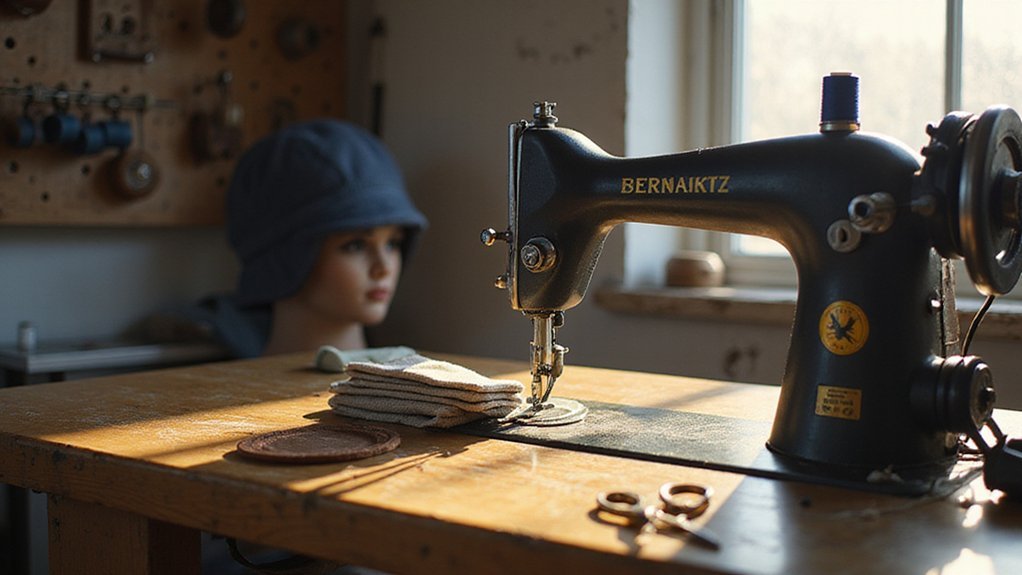
When you’re picking a machine for hat patches, you’ll want to think about stitch direction flexibility first, since you’ll often need to pivot around curved brims and tight corners without wrestling the fabric. Material thickness capacity matters just as much, because a standard home machine might stall on dense canvas or multiple denim layers, so you’ll need something that powers through without skipping stitches. And don’t overlook machine portability or setup stability, since a lighter model is easier to store, but you’ll also want a solid base that won’t tip when you’re pushing thick patches through. Needle and thread options round out your checklist, so look for adjustable tension and a range of needle sizes to match your patch weight.
Stitch Direction Flexibility
As you’re wrestling a curved hat brim or trying to stitch a patch onto a fitted cap’s crown, the machine’s stitch direction flexibility becomes your secret weapon. You want a machine that sews side to side, back and forth, and even at angles without complaint. This isn’t just for show. Adjustable needle positions let you tackle intricate patterns and detailed repairs with ease. You’ll improve seam strength and aesthetic appeal, all while minimizing constant workpiece repositioning. That means fewer errors and faster results. So look for machines offering multi directional stitching. It saves time and boosts design options for curved or irregular hat surfaces. After all, why fight your equipment when it can work with you?
Material Thickness Capacity
At the core of any hat patch job lies one critical question: can the machine physically chew through what you’re feeding it? You need a machine that handles thickness without jamming or snapping a needle. Look for a maximum sewing thickness around 0.5 inches or more, especially if you’re layering heavy patch material over denim or leather.
Stronger motors or manual leverage give you the guts to punch through multiple layers. Adjustable stitch length and tension are your best friends here, letting you fine-tune for each material’s quirks. For example, shorter stitches work better on dense patches to prevent skipped stitches. And don’t forget: a machine built for thick fabrics won’t struggle like a basic model would. That’s the difference between a durable repair and a frustrating mess.
Machine Portability
If you’re sewing on the go or moving your machine between rooms, portability really matters. You want a lightweight model, ideally under 20 pounds, so you don’t strain your back hauling it around. Compact designs with foldable or detachable parts are a lifesaver for tight spaces. Consider a hand crank machine too. It’s often lighter than electric ones since it skips heavy motors. Look for a slim profile that fits easily into a small bag or storage cubby. Built in carrying handles or a carrying case? That’s a bonus for frequent movers. You’ll appreciate being able to grab it and go without fuss. Portability doesn’t mean sacrificing durability, just smart engineering.
Needle and Thread Options
Portability gets your machine where it needs to go, but once it’s set up, the real work happens with the needle and thread. You’ll want a needle that matches your fabric and patch material. Thicker needles handle multiple layers or tough stuff like leather and canvas. Topstitch needles give you stronger, more secure stitches for hats. For thread, choose nylon or polyester for their durability. They won’t snap under pressure. Pay attention to needle size matching thread size, or you’ll face breakage or skipped stitches. And don’t force a thin needle through heavy layers. You’ll avoid frustration and damage by picking the right combo. It’s that simple!
Setup and Stability
Since a hat’s curved surface and thick patch layers can push your machine around, setup and stability become non-negotiable. You need a setup that laughs at vibration, not one that dances across your table. Start with a solid base: a heavy, non-slip mat or a sturdy tripod stand keeps things locked down, so your stitches stay crisp instead of drifting into wobbly chaos.
Check that your machine sits perfectly level; even a slight tilt throws off thread tension and alignment, and you’ll curse the uneven seams later. Secure both the machine’s feet and the hat’s brim with clamps or a free-arm attachment—this minimizes the jitter that wrecks patchwork. Calibrate your tension until the thread feeds like butter, then double-check your bobbin’s balance.
- Level the surface with a carpenter’s level first.
- Use a rubberized pad under the machine for extra grip.
- Lock the presser foot’s pressure for thick layers.
A stable rig is half the battle, so don’t skip it. Your hat, and your sanity, will thank you!