You don’t need a fancy machine to make things that look store-bought. With a straight stitch and a few yards of fabric, you can create projects you’ll actually use. Tote bags, pillow covers, even small stuffed animals all come together quickly. But knowing which crafts are foolproof matters most.
Portable Sewing Machine for Beginners
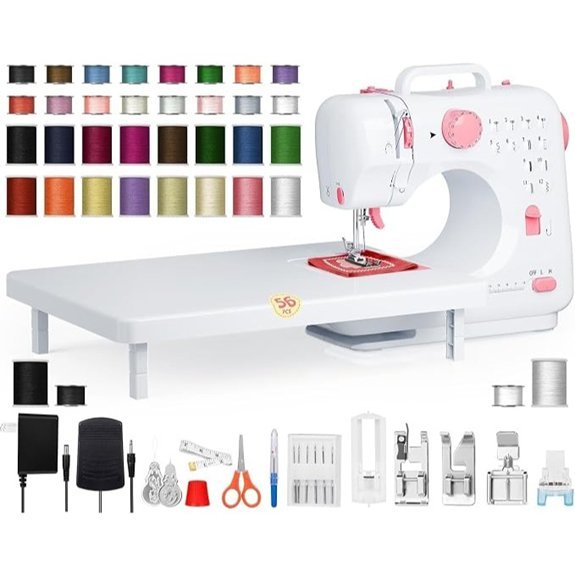
If you’re hunting for a first sewing machine that won’t cramp your style or your counter space, the portable model here is your best bet, especially if you’re a total newbie living in a dorm, a tiny apartment, or just a cozy corner of your home. Weighing just 5.7 pounds and measuring a compact 10.6 x 9.3 x 4.5 inches, it’s light enough to tuck away on a shelf. You get 12 built-in stitch options for straight seams, hems, buttonholes, and simple decorations. Plus, it comes pre-threaded with a 32-color thread kit and an extension table. Use the foot pedal or push-button switch. No fuss, just sew.
Sewing Machine for Beginners (Premium Edition)
https://m.media-amazon.com/images/I/71AHYTJ69yL._AC_SX679_.jpg
The twin needle stitching on this machine instantly sets it apart for beginners juggling mending, crafts, and clothing tweaks. You get 12 built in stitches, including basics and decorative options, plus reverse stitching to reinforce those seams. It comes pre threaded and includes a test fabric and a 32 color thread kit, so you can start right away.
This Buvnatep SM-520A model measures just 10.6 by 4.5 by 9 inches and weighs only 3.7 pounds. It fits on a dorm desk or apartment corner. You operate it with either the foot pedal or a button, and two speed settings let you sew slowly or zip through projects. The LED light keeps your work visible.
SINGER® M1500 Lightweight & Portable Sewing Machine with Accessory Kit
https://m.media-amazon.com/images/I/61w0cqUz2EL._AC_SX679_.jpg
This sewing machine is built for your first projects. At just 9.7 pounds, you’ll easily tote it to classes or tuck it into a corner of your home. You’ll find six built-in stitches, but don’t let the number fool you; the 57 stitch applications mean you get a scallop, blind hem, and a precise 4-step buttonhole without wrestling with dials. The preset stitch length and width remove guesswork, while the LED light shows you every detail. You’ll pull the all-purpose, zipper, and buttonhole feet straight from the included kit, and threading guides simplify setup. Plus, the CreatiVATE app provides manuals and troubleshooting, so you’re never stuck. And with a one-year warranty, you’ve got support while you learn.
Mini Sewing Machine for Beginners with 12 Stitches
https://m.media-amazon.com/images/I/71Ve4ZLa-WL._AC_SX679_.jpg
You’re just starting out with sewing, and the Mini Sewing Machine with 12 stitches is your perfect match. It arrives pre-threaded and tested, ready to go. You get 12 built in stitches for straight seams, hems, buttonholes, and quick repairs. Use the foot pedal or the machine’s button for control. An LED light brightens your work, and the thread cutter keeps things tidy.
This compact machine (about 10.6 by 4.5 by 9.3 inches) runs on an AC adapter or 4 AA batteries, but not both at once. The dual speed system and metal hook mechanism give you consistent stitches. Swap presser feet for different projects. Clear guides make setup simple. For home mending or craft fun, it’s a reliable, portable companion!
Portable Mini Sewing Machine for Beginners Kit
https://m.media-amazon.com/images/I/71fm59oXNeL._AC_SX679_.jpg
For absolute beginners diving into sewing crafts, nothing beats a compact machine that simplifies every step. You get a portable mini electric sewing machine designed for everyday mending loose seams, hemming lightweight fabrics, and simple DIY projects. It features a 2 speed setting (low and high) plus a hands free foot pedal, so both hands guide fabric smoothly. The removable extension table boosts workspace for hems and small alterations, delivering better stability. Powered by a DC adapter (no batteries required), you’re always ready. Your 57 piece starter kit includes:
- 16 thread spools
- 24 bobbins
- 7 spare needles
- 3 needle threaders, a thimble, seam ripper, scissors, measuring tape
The machine measures 7.87 x 3.93 x 7.48 inches, built from durable materials for frequent light use. And you get a 1 year warranty for peace of mind. That’s everything to start practicing and exploring right away!
Handheld Sewing Machine for Quick Stitch Mending
https://m.media-amazon.com/images/I/71qLQ0PvumL._AC_SX679_.jpg
Handheld sewing machines are a game changer for absolute beginners. You grab this 6.24-ounce gadget, slip it in your bag, and you’re ready to fix a hem anywhere. Just pop in 4 AA batteries or plug in the USB, press the button, and watch it stitch. No complicated threading tangles, no foot pedal fuss; it’s automatic and forgiving. You’ll use it for quick mends on jeans, T-shirts, or curtains, and the included kit has bobbins, scissors, a needle threader, and more. You don’t need a full-size machine for small repairs.
For quick stitch mending, you’ll want to knot the thread after sewing to avoid loose ends, since it’s single-thread. Here’s how you tackle a tear:
- Place the fabric flat, insert the needle where you want to start.
- Press the button and guide it slowly along the seam.
- Pull out, tie a knot, and trim.
It’s perfect for children’s DIY crafts or a spontaneous patch job. You can create little accessories or repair a curtain in minutes. And honestly, it makes a thoughtful gift for Mother’s Day or a birthday. Just remember, it’s about small fixes, not heavy projects, so keep your expectations realistic. You’ll find it’s a handy tool to have around for life’s little wardrobe emergencies.
Electric Mini Sewing Machine for Beginners with Kit
https://m.media-amazon.com/images/I/71ino7w7adL._AC_SX679_.jpg
This mini electric sewing machine is your easiest path to stitching success. Don’t let a tiny footprint fool you. At just 11 ounces and 2.38 inches high, it tucks into a dorm drawer but delivers serious results. You get dual speed control, so you can crawl before you sprint. Double thread stitching creates stronger seams for your pet clothes, shopping bags, or aprons. An integrated light helps you see every stitch. Plus, the extension table gives you stability for larger fabric pieces like table mats.
Your complete 62-piece kit means you’re ready out of the box. No extra shopping. Just plug in at 110 volts, choose your control method foot pedal or button press, and start sewing. Everything you need is included scissors, needles, thread spools, tape measure. It’s pre-threaded for demonstration very helpful for understanding the path. Use it small to learn big!
Brother XM2701 Sewing Machine, 27 Stitches
https://m.media-amazon.com/images/I/71QdzSt93zL._AC_SX679_.jpg
Searching for a sewing machine that grows with you, not against you, can feel overwhelming. The Brother XM2701 delivers 27 built-in stitches, including decorative, blind hem, zigzag, stretch, and an auto-size buttonhole. It’s lightweight at just 12.6 pounds, so you can easily move it around. You’ll love the automatic needle threader and jam resistant drop-in bobbin. The free arm lets you tackle cuffs and sleeves with ease. Included are six sewing feet, a twin needle, and an instructional DVD. Plus, Brother offers free lifetime technical support and a 25 year warranty. It’s a reliable partner for your craft journey.
KPCB Tech Sewing Machine for Beginners
https://m.media-amazon.com/images/I/81Xec0wyWoL._AC_SX679_.jpg
Looking for an affordable way to test the sewing waters? The KPCB Tech Sewing Machine for Beginners packs a surprising punch for its size. Weighing just 2.97 pounds, this compact machine fits neatly into small workspaces, yet it’s fully loaded. You get 20 pre-cut 8”x8” cotton squares to start projects immediately, plus a complete tool kit with bobbins, scissors, measuring tape, and a thimble. Tutorial videos are continuously updated, so you’re never stuck guessing. The finger guard and adjustable slow-speed option keep things safe, especially if you’re guiding a curious kid. It handles up to five fabric layers without manual knotting, and the double-thread capability gives you sturdier stitches. Just note: there’s no reverse stitch and limited stitch types, but for basic repairs and simple crafts, this starter machine gets you sewing fast. The included extension table and multilingual manuals are nice touches, too.
Factors to Consider When Choosing Sewing Machine Crafts for Beginners

When you start picking out a sewing machine, four key factors will shape your experience more than any bells and whistles: machine weight, stitch variety, power source, and setup ease. A heavier machine (15 to 20 pounds) stays put during dense stitching but hurts your back when you haul it to a class, while a lighter one (under 10 pounds) is portable yet might vibrate across your table at high speeds. And don’t overlook the workspace footprint; a machine with a 15-inch throat (the space to the right of the needle) gives you room for quilting, but a compact model with a 10-inch throat may need less storage, so measure your craft area first.
Machine Weight Trade-Offs
Since you’ll likely be moving your machine between classes or stashing it in a closet, weight is a bigger deal than you might think. Lightweight models under 10 pounds are perfect for portability, but they may lack some heavy-duty features and can feel less stable during sewing. Heavier machines over 10 pounds offer greater stability and operate more quietly, but you’ll dread hauling them around.
Stitch Variety Essentials
Your machine’s stitch library is your creative playground, and for beginners, it’s the difference between feeling boxed in and feeling like you can tackle almost anything. You need at least three essential stitches: straight, zigzag, and a decorative option. Straight stitches handle seams and hems, zigzag prevents fraying on edges, and decorative stitches let you add instant flair to napkins or pillowcases.
Look for automatic stitch selection. One touch and you switch from a hem to a buttonhole. More stitch variety means you can practice different techniques, from edging to simple embellishments, without buying a new machine. Each stitch builds your confidence as you manipulate fabric, so you’re never stuck with just one look. A robust stitch library transforms a beginner project from basic to genuinely impressive, quickly.
Power Source Flexibility
Even the best stitch library won’t help if your machine can’t run where you need it. So, before you commit, check its power source flexibility. Many beginner models now offer dual operation: plug into a wall outlet for heavy indoor projects, or switch to batteries for outdoor markets, camping trips, or sudden power outages. This adaptability saves you from being stranded mid-hem on a picnic table. Battery power is perfect for quick repairs on the go—think reattaching a button at a friend’s house or fixing a curtain rod pocket in a shed without outlets. For portability, opt for machines that use standard AA or 9V batteries, not proprietary packs. Also, consider battery life per charge; you don’t want it dying after thirty minutes of zigzag stitching. Choose based on where you’ll actually sew. If you’re always near a plug, AC-only is fine. But for true flexibility, dual power wins every time.
Setup and Threading Ease
After sorting out power sources, you’ll face the moment of truth: getting the machine threaded and ready to sew. Don’t stress. Look for a machine that’s pre-threaded or features an automatic needle threader. That alone saves you from fumbling with tiny eyelets. Color-coded threading paths are your friend; they guide each step clearly, so you won’t guess wrong. Built-in thread cutters and easy-access bobbin winding cut setup time in half, letting you focus on stitching. And choose a model with step-by-step instructions or video tutorials built right in. They boost your confidence fast. Plus, a lightweight, compact machine makes repositioning and initial threading adjustments far easier for your hands. When threading feels intuitive, you’ll jump straight into sewing instead of wrestling with tangled frustrations. That’s the win you deserve.
Workspace Footprint
Before you settle on a machine, consider its workspace footprint because it’s not just about the stitching area. The whole unit’s dimensions matter, especially when you’re squeezing it onto a cramped desk or a dorm room folding table. Measure your spot first, then compare it to the machine’s base, typically nine to eleven inches square for portable models. A compact, lightweight body is your best friend here, letting you tuck it away without a backache.
Look for a foldable extension table, too; it gives you a wide surface for fabric but collapses when you don’t need the extra support. And think about storage: can you leave it out, or does it need to slide onto a shelf? That footprint dictates your entire setup, so choose one that fits your life, not just your crafty ambitions.
Included Accessory Value
When you unbox a new sewing machine, the included accessories can make or break your first project experience, so don’t gloss over that accessory list. A well stocked kit often brings extra presser feet, bobbins, and threads, which instantly expands your creative range without you hunting down separate purchases. This means you can experiment with straight stitches, zigzags, and even buttonholes right away.
That accessory value matters because it directly supports your learning curve. You’ll practice different techniques with all necessary tools at hand, reducing setup time and frustration. Look for sets that include a walking foot for tricky fabrics or a zipper foot for bags. Multiple stitch options paired with compatible add ons let you jump into crafts like pillowcases or simple totes. A value packed bundle makes your first projects smoother, so you stay motivated rather than stalled.
Durability for New Users
You already know the included accessories can set you up for success, but those extra feet and threads won’t matter much if your machine gives out after a few projects. For new users, durability isn’t just a bonus; it’s your foundation. You’ll want a model with a metal frame or reinforced components, as these resist wear far longer than plastic alternatives. And sturdy construction means fewer breakdowns of gears or switches, so you’re not sidelined with repairs mid‑practice. That reliability lets you build confidence, running stitch after stitch without frustrating hiccups.
- Look for metal internal parts: They handle repeated sewing sessions without cracking.
- Choose a machine with a strong motor: It powers through layers without straining.
- Check for a stable base: This keeps everything aligned as you improve.
A durable machine gives you a consistent experience, turning practice into progress instead of a hassle.