
If you’re serious about sewing, you’ll need more than just a machine – you’ll need the right workspace to bring your creative visions to life. Today’s top sewing cabinets blend ergonomic design with smart storage solutions, making it easier to stay organized and comfortable during long crafting sessions. From compact fold-away units to professional-grade stations with built-in lighting, these seven cabinets represent the best of what the year 2026 has to offer.
Arrow Sewing Kangaroo Sydney Sewing Cabinet & Craft Chair Set


If you’re seeking professional-grade comfort for extended sewing sessions, the Arrow Sewing Kangaroo Sydney Cabinet & Craft Chair Set delivers with its ergonomic design and adjustable features. The chair’s targeted lumbar support helps maintain proper posture, while its height adjusts from 18″ to 22″ to match your ideal working position.
You’ll appreciate the hidden storage under the seat for keeping notions within reach. The chair’s plush cushions and heavy-duty upholstery guarantee lasting comfort, while the five-star base with 360° swivel and non-marking casters lets you glide smoothly across your crafting space.
Best For: Dedicated sewists and crafters who spend long hours at their workstation and need ergonomic support with convenient storage options.
Pros:
- Adjustable height and lumbar support promote healthy posture during extended sewing sessions
- Hidden storage compartment provides easy access to frequently used notions
- 360° swivel base with smooth-rolling casters offers excellent mobility around workspace
Cons:
- Higher price point compared to basic sewing chairs
- Requires assembly upon delivery
- Limited color and fabric pattern options
Arrow Harriet Full-Size Sewing Cabinet with Hydraulic Lift
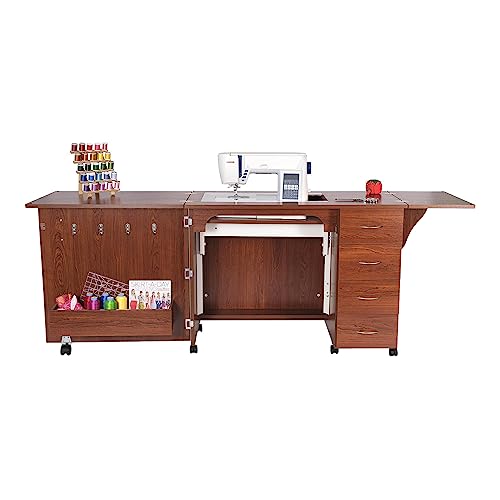
The Arrow Harriet Full-Size Sewing Cabinet stands out as a top choice for serious quilters and seamstresses who need expansive workspace and versatility. You’ll appreciate the 3-position hydraulic lift that accommodates machines up to 55 pounds, allowing for free-arm, flatbed, and storage positions.
With four large drawers, embroidery hoop hooks, and two foldable side leaves, you won’t run short on storage space. The teak cabinet’s heavy-duty casters let you move it easily, while the ergonomic design guarantees comfort during extended sewing sessions. It’s backed by a 10-year warranty and boasts a 4.6-star rating from users who praise its quality construction and straightforward assembly.
Best For: Serious quilters and sewists who need a spacious, organized workspace with ample storage and the flexibility to accommodate large sewing projects.
Pros:
- Versatile 3-position hydraulic lift system allows for multiple sewing positions and easy machine storage
- Extensive storage with 4 large drawers and built-in embroidery hoop hooks
- Expandable workspace with foldable leaves and mobile design with locking casters
Cons:
- Large footprint requires significant space even when collapsed
- Assembly required which may be challenging for some users
- Higher price point compared to basic sewing tables
Sauder Sewing/Craft Storage Cart with Pantry Cabinets
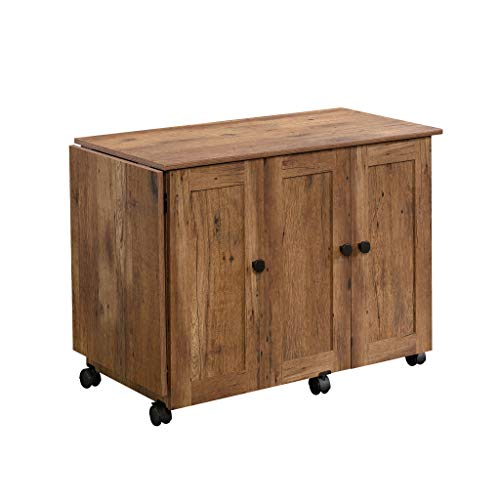
Crafters seeking versatility will appreciate Sauder’s dual-purpose storage cart, which combines a vintage oak finish with modern functionality. You’ll find smart storage solutions behind the roll-open door, including two storage bins and a hidden shelf perfect for your sewing machine.
The drop leaf extends your workspace when you need it, while easy-roll casters let you move the cart wherever your projects take you. Two adjustable shelves behind the door give you flexible storage options for all your crafting supplies. Whether you’re sewing or working on other crafts, this cart adapts to your needs.
Best For: Crafters and sewers who need a mobile storage solution with flexible workspace and organized compartments for supplies and equipment.
Pros:
- Versatile design with drop leaf for extra workspace and hidden sewing machine storage
- Mobile with easy-roll casters for convenient room-to-room movement
- Multiple storage options including bins and adjustable shelves behind roll-open door
Cons:
- Limited to vintage oak finish option
- Single drop leaf may not provide enough workspace for larger projects
- Interior storage space may be too compact for extensive craft supply collections
Arrow Sewing “Judy” Portable Folding Sewing Cabinet

Designed with mobility in mind, Arrow’s “Judy” cabinet offers three essential features that make it perfect for sewists with limited space: a hydraulic lift system, locking wheels, and a foldable design.
The cabinet accommodates most standard machines up to 55 pounds and provides three lift positions for versatile sewing. You’ll appreciate the custom acrylic inserts that create a flush surface and the storage cubby for your notions. While assembly takes about two hours and may require an extra set of hands, the sturdy construction and 10-year warranty justify the effort. Just be mindful during installation, as overtightening screws can affect the door’s stability and hinge performance.
Best For: Sewists with limited space who need a mobile, compact cabinet that can accommodate standard-sized sewing machines while providing essential storage and versatility.
Pros:
- Portable design with locking wheels and folding capability makes it perfect for small spaces
- Hydraulic lift system offers three positions (free arm, flat bed, storage) for versatile sewing
- Durable construction with 10-year warranty and ability to hold machines up to 55 pounds
Cons:
- Assembly can be challenging and time-consuming, requiring 1.5-2.5 hours and potentially two people
- Some reported issues with door stability and hinge quality
- Customer service response times can be slow when replacement parts are needed
Best Choice Products Folding Sewing & Craft Table with Storage

Space-conscious sewists will appreciate this ingenious folding table that transforms from a full-sized craft station to a compact side desk. When open, you’ll find 46 inches of workspace, perfect for sewing machines and materials.
The table’s smart storage features include two rows of pegs for organizing supplies, built-in trays, and a spacious interior shelf behind magnetic doors. You can keep your scissors, pins, yarn, and other essentials neatly tucked away.
Built with MDF wood and metal hinges, this mobile unit rolls easily on lockable wheels. When folded, it measures just 23 inches long, making it an ideal choice for small spaces where versatility matters.
Best For: Hobby sewists and crafters with limited space who need a versatile workstation that can be easily stored when not in use.
Pros:
- Transforms from full workspace to compact side table
- Comprehensive storage with pegs, trays, and interior shelf
- Mobile design with lockable wheels for easy movement
Cons:
- Limited width at 14.75 inches may restrict larger projects
- MDF construction may be less durable than solid wood
- Single interior shelf might not be sufficient for extensive supply storage
Arrow Kangaroo Bandicoot Sewing Cabinet (Ash White)

The Arrow Kangaroo Bandicoot Sewing Cabinet offers professional-grade features for serious sewists who need a stable, mobile workspace. This ash white cabinet includes a versatile 3-position hydraulic lift that accommodates machines up to 55 pounds, allowing you to switch between free arm, flat bed, and storage positions effortlessly.
You’ll appreciate the thoughtful storage solutions, including 20 thread spool holders on the door, built-in cubbies for notions, and two shelves for magazines. While assembly requires patience, the cabinet’s heavy-duty locking casters guarantee mobility when needed. The engineered wood construction with lacquered finish provides durability, backed by a lifetime warranty.
Best For: Dedicated sewists and quilters seeking a professional-grade, space-efficient cabinet with ample storage and the flexibility to accommodate various sewing positions.
Pros:
- Versatile 3-position hydraulic lift system allows easy transitions between different sewing positions
- Comprehensive storage solutions including thread holders, cubbies, and magazine shelves
- Durable construction with mobility features and lifetime warranty
Cons:
- Time-consuming assembly process with potentially confusing instructions
- Some users report manufacturing issues with parts
- High price point compared to basic sewing tables
Folding Sewing Machine Cabinet with LED Lighting & Charging Station

Modern sewists juggling multiple projects will appreciate Kikihouse’s innovative folding cabinet that combines storage, lighting, and charging in one compact unit. The US850201 features a 33-spool thread rack, side shelves, and a spacious interior cabinet, all wrapped in a waterproof, scratch-resistant MDF construction.
You’ll find the built-in adjustable LED lighting perfect for detailed work, while the integrated charging station keeps your devices powered. The space-saving design lets you flip up the worktop when needed, and brake-equipped wheels make it easy to move. Though it’s new to the market, early users praise its functionality and easy assembly, making it ideal for small sewing spaces.
Best For: Home sewists and crafters with limited space who need a multi-functional workstation with modern amenities like device charging and adjustable lighting.
Pros:
- All-in-one solution with storage, lighting, and charging capabilities
- Space-saving folding design with mobile wheels and brakes
- Waterproof, scratch-resistant finish for durability
Cons:
- Higher price point compared to basic sewing cabinets
- Limited customer reviews due to being new to market
- May require significant assembly time and effort
Factors to Consider When Choosing a Cabinet for Sewing Machine
When choosing the perfect sewing machine cabinet, you’ll need to assess your available space and required storage capacity while ensuring it’s compatible with your specific machine model. You’ll want to examine the cabinet’s construction materials closely, as high-quality wood or sturdy composites will provide better durability and stability for your sewing projects. If you plan to move your workspace frequently, consider a cabinet with wheels or a lightweight design that offers both portability and functionality without sacrificing essential features.
Size and Space Requirements
Selecting the right size sewing cabinet requires careful consideration of your available space and specific needs. You’ll want to measure your room dimensions first, verifying the cabinet won’t overcrowd your workspace. Remember that standard sewing machine openings typically measure 25 x 17 inches, but you might need a wider surface for larger projects.
Pay attention to the cabinet’s height, which should match your ergonomic requirements. Look for adjustable options ranging from 18 to 30 inches to maintain comfort during long sewing sessions. If you’re working with limited space, consider a compact folding design. For maximum functionality, confirm your cabinet includes enough storage compartments for all your supplies. If you plan to move the cabinet frequently, choose one with sturdy casters for easy repositioning.
Storage Capacity Needs
Three key storage considerations will determine the success of your sewing cabinet choice: capacity, organization, and adaptability.
You’ll want to carefully assess how much storage space you need for your sewing essentials. Look for cabinets that offer diverse compartments, including drawers and shelves that can accommodate your fabric collection, tools, and notions. Make sure the cabinet’s structural integrity can support your machine’s weight along with your supplies.
Smart organizational features like built-in thread holders, concealed storage areas, and adjustable shelving will help you maintain an efficient workspace. Consider how you’ll access frequently used items, and don’t forget about future growth. You’ll appreciate having flexible storage solutions that can adapt as your crafting needs evolve, such as expandable leaves or modular compartments.
Mobility and Portability
Beyond organizing your sewing supplies, you’ll need to think about how and where you’ll move your cabinet. Look for models with heavy-duty locking casters that’ll provide stability while letting you glide smoothly across different flooring surfaces.
If you’re working with limited space, consider folding cabinets that you can easily store when not in use. Check the cabinet’s weight capacity to guarantee it’ll support your machine while remaining manageable to move. Opt for designs with built-in handles or wheels that make repositioning effortless during your sewing projects.
You’ll find that cabinets with compact footprints are ideal for maximizing your workspace without compromising mobility. These space-smart options let you make the most of your crafting area while maintaining the flexibility to relocate as needed.
Machine Compatibility Check
When choosing a sewing machine cabinet, machine compatibility stands as your most critical consideration. You’ll need to verify that your cabinet can support your machine’s weight, with most models accommodating up to 55 pounds. Check the lift opening’s dimensions to confirm your specific machine model fits properly.
Look for cabinets featuring hydraulic lifts that offer multiple positioning options – free arm, flat bed, and storage configurations. This versatility will enhance your sewing experience. If you’ve got a heavier machine, pay special attention to the cabinet’s weight capacity recommendations. Don’t forget to check if the cabinet works with custom acrylic inserts, as these create a smooth, flush surface that improves fabric feeding. These inserts can make a significant difference in your sewing projects’ quality and ease.
Construction Material Quality
The materials used in your sewing cabinet directly impact its performance and longevity. When evaluating construction quality, you’ll want to focus on cabinets made from engineered or solid wood, as they offer superior durability for regular use. While MDF options are budget-friendly and lightweight, they typically can’t match the strength and stability of wood-based alternatives.
Look for cabinets with lacquered finishes, which protect against daily wear and make cleaning easier. Since your sewing machine’s weight matters, choose materials that can provide adequate support – heavier materials generally offer better stability for larger machines. You’ll also appreciate cabinets designed with user-friendly assembly in mind, where quality materials combine with straightforward instructions to guarantee your cabinet remains sturdy and reliable for years to come.
Assembly Difficulty Level
How prepared are you to tackle the assembly of your new sewing cabinet? You’ll want to carefully assess your DIY skills and available help before making your purchase. Most sewing cabinets require between 1.5 to 2.5 hours to assemble, with hydraulic lift models demanding extra attention and potentially a second pair of hands.
When assembling your cabinet, you’ll need to be particularly mindful of screw tension – overtightening can compromise the cabinet’s stability and functionality. If you’re considering a cabinet with hydraulic mechanisms, expect a more complex assembly process compared to simpler designs. Don’t hesitate to search for online assembly videos specific to your model, as they often provide clearer guidance than written instructions alone. These visual aids can help you avoid common assembly pitfalls.
Ergonomic Design Features
Selecting the right ergonomic features in your sewing cabinet can make the difference between comfort and chronic pain during long crafting sessions. You’ll want to focus on cabinets that offer targeted lumbar support and height adjustability to maintain proper posture while you work.
Look for models with premium cushioning and durable upholstery that’ll keep you comfortable throughout extended projects. Hydraulic lift mechanisms are essential for smooth changes between sewing positions, preventing unnecessary strain on your body. When evaluating cabinet options, don’t overlook the importance of stability. Heavy-duty casters should provide easy mobility without compromising the cabinet’s steadiness during use. The ideal cabinet will allow you to position your sewing surface at the perfect height for your natural arm position, reducing shoulder and back strain.
Additional Workspace Options
Smart workspace design can transform your sewing experience with adaptable features that maximize both efficiency and comfort. When selecting a sewing cabinet, you’ll want to prioritize models with foldable side leaves that expand your work area without claiming permanent space in your room.
Look for cabinets featuring drop-leaf designs that let you adjust your workspace on demand. These clever additions give you the flexibility to spread out larger projects when needed, then quickly fold away when you’re done. Heavy-duty lifts are essential for accessing different sewing positions while keeping your machine stable. You’ll also benefit from built-in shelving and compartments that keep supplies within reach without cluttering your work surface. The key is choosing a cabinet that offers smooth, easy shifts between different workspace configurations.