What’s the one thing keeping your sewing machine from turning into a noisy, skipping mess? It’s grease, plain and simple. You need the right one to keep those stitches smooth and steady, so let’s walk through the top five options built for heat, moisture, and metal parts.
| Permatex 80345 White Lithium Grease 1.5 oz. |  | Best Budget Grease | Base/Thickener Type: Lithium thickener | Container Size: 1.5 fl oz tube | Temperature Range: Up to 1100°F | VIEW LATEST PRICE | Read Our Analysis |
| Lubrol SEW Ultra Clean Synthetic Grease |  | Best for Sewing Machines | Base/Thickener Type: Lithium thickener with PAO base oil | Container Size: 4 oz bottle | Temperature Range: Not specified | VIEW LATEST PRICE | Read Our Analysis |
| Tri-Flow TF23004 Clear Synthetic Grease – 3 oz. Tube Red |  | High-Performance Pick | Base/Thickener Type: Synthetic grease with Teflon | Container Size: 3 oz tube | Temperature Range: Up to 400°F | VIEW LATEST PRICE | Read Our Analysis |
| G All-Purpose PTFE Grease Waterproof High-Temp – 0.75 oz Tube |  | Extreme Conditions Choice | Base/Thickener Type: PTFE grease | Container Size: 0.75 oz tube | Temperature Range: -40°F to +530°F | VIEW LATEST PRICE | Read Our Analysis |
| Labelle 2106 Sewing Machine Motor Grease with PTFE |  | Top-Rated Maintenance | Base/Thickener Type: Mineral oil with PTFE additive | Container Size: Tube (size not specified) | Temperature Range: Not specified | VIEW LATEST PRICE | Read Our Analysis |
More Details on Our Top Picks
Permatex 80345 White Lithium Grease 1.5 oz.
If you’re after a budget friendly grease that handles high heat and metal parts, this one’s a solid pick. Permatex 80345 withstands temps up to 1100°F, so your sewing machine’s moving parts stay smooth without breaking down. It’s an all-purpose lubricant, perfect for metal to metal or metal to plastic contact. You get a 1.5 oz tube, easy to apply on hinges, tracks, or gears. Customer ratings hit 4.7 out of 5 stars from over 6,860 reviews. And it fights rust and moisture too.
- Base/Thickener Type:Lithium thickener
- Container Size:1.5 fl oz tube
- Temperature Range:Up to 1100°F
- Special Additives:None specified
- Material Compatibility:Metal and plastic
- Primary Application:General automotive and hinges
- Additional Feature:Withstands temperatures up to 1100°F
- Additional Feature:Suitable for plastic-to-plastic contact
- Additional Feature:One-year warranty included
Lubrol SEW Ultra Clean Synthetic Grease
For industrial or commercial sewers pushing machines to high speeds daily, this grease delivers outstanding performance. It’s a fully synthetic, white, odorless formula, so you won’t deal with staining or funky smells. The PAO base oil and lithium thickener handle high pressure and frequency without degrading, and since it’s compatible with metal and plastic parts, you can use it across your whole setup.
It applies as a translucent film, meaning you get protection without a messy buildup. And it won’t discolor over time, keeping your machine clean. You’ll want this for heavy workloads, since it stays put and keeps moving parts smooth. For a reliable, all-purpose option, this one quietly gets the job done.
- Base/Thickener Type:Lithium thickener with PAO base oil
- Container Size:4 oz bottle
- Temperature Range:Not specified
- Special Additives:PTFE (NanoXA)
- Material Compatibility:Metal and plastic
- Primary Application:Sewing machines (industrial and domestic)
- Additional Feature:Fully synthetic, odorless formula
- Additional Feature:Contains NanoXA PTFE additive
- Additional Feature:Does not discolor over time
Tri-Flow TF23004 Clear Synthetic Grease – 3 oz. Tube Red
Tri-Flow TF23004 Clear Synthetic Grease is your high-performance pick when you need a lubricant that shrugs off water and heat, making it the best choice for sewists who also maintain bikes or power tools. With Teflon in the mix, you’re getting extra glide that keeps your machine’s gears and bushings feeling buttery. It’s rated N.L.G.I. Grade 2, so it’s thick enough to stay put but not so stiff that it gums up. And here’s the kicker: it handles temperatures up to 400°F, so you can run heavy workloads without worry. Packaged in a 3 oz. tube, it’s easy to squeeze into tight spots, and it’s widely loved, holding a 4.8-star average across 1,410 reviews. Use it on your hook assembly, race, or feed dogs, then wipe away any excess. It’s a versatile grease you’ll reach for again and again.
- Base/Thickener Type:Synthetic grease with Teflon
- Container Size:3 oz tube
- Temperature Range:Up to 400°F
- Special Additives:Teflon
- Material Compatibility:Mechanical components (general)
- Primary Application:Bicycle and mechanical parts
- Additional Feature:N.L.G.I. Grade 2 consistency
- Additional Feature:Contains Teflon additive
- Additional Feature:Waterproof and high-temperature rated
G All-Purpose PTFE Grease Waterproof High-Temp – 0.75 oz Tube
G All-Purpose PTFE Grease is your extreme conditions choice. It handles a massive temperature range from -40°F to +530°F, so it won’t break down in your hot sewing machine motor or garage. This waterproof, non metallic formula works on metal, plastic, rubber, and carbon fiber parts. It’s non migrating, meaning it won’t drip or spread where you don’t want it. Plus, it resists vibration and electrical interference. A little dab goes a long way, providing long lasting lubrication for hinges, bearings, and even 3D printer rails. It beats lithium and silicone greases hands down. Just apply a tiny amount, and you’re set for years.
- Base/Thickener Type:PTFE grease
- Container Size:0.75 oz tube
- Temperature Range:-40°F to +530°F
- Special Additives:PTFE
- Material Compatibility:Metal, plastic, rubber, carbon fiber, painted metal
- Primary Application:All-purpose (household, marine, automotive)
- Additional Feature:-40°F to +530°F range
- Additional Feature:Dielectric for electrical components
- Additional Feature:Lasts up to 10 years
Labelle 2106 Sewing Machine Motor Grease with PTFE
Labelle 2106 is your answer if you own a high-speed machine and want top-rated maintenance without the fuss. Its PTFE (Teflon) additive creates one of the slickest substances around, slashing friction and cutting noise. You’ll only need a few drops from the convenient tube per application, making it economical and easy to stash in your sewing kit.
- Key performance boost: Reduces wear on fast-moving parts, preventing costly repairs.
- Application tip: Check your machine’s manual for exact greasing points; then apply regularly.
- Proven reputation: Labelle Lubricants has over 30 years’ experience, selling over 1 million units.
Customers rate it 4.7 out of 5 stars for good reason. And that’s a smooth stitch you can count on!
- Base/Thickener Type:Mineral oil with PTFE additive
- Container Size:Tube (size not specified)
- Temperature Range:Not specified
- Special Additives:PTFE (Teflon)
- Material Compatibility:Sewing machine components (general)
- Primary Application:Sewing machines and hobby machinery
- Additional Feature:Only a few drops needed
- Additional Feature:Reduces noise and friction
- Additional Feature:Over 1 million units sold
Factors to Consider When Choosing Grease for Sewing Machine
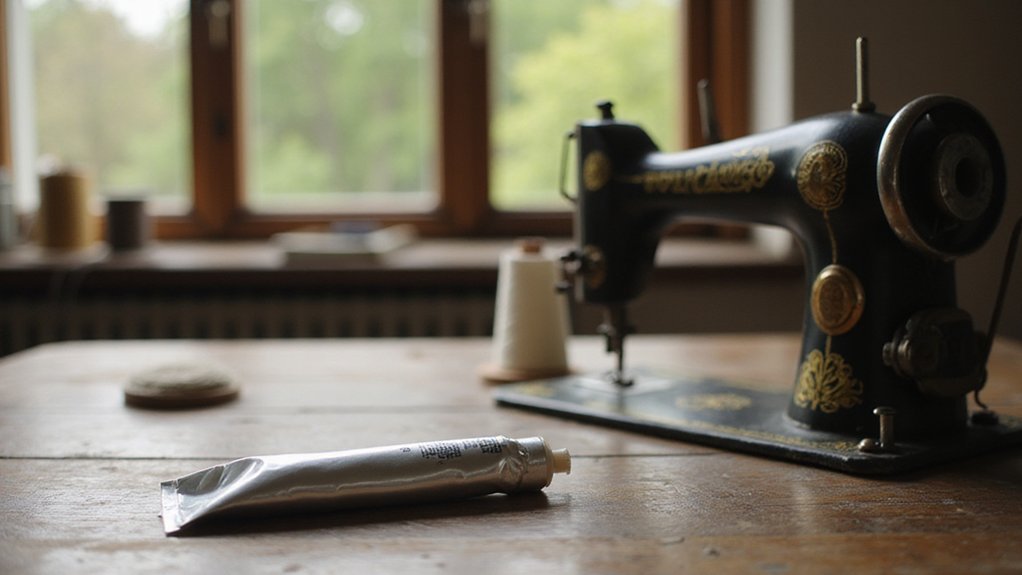
When you’re picking a grease for your machine, focus on the type of grease, its temperature tolerance, and material compatibility. You’ll also want to take into account the application method and how long the grease will perform under regular use. These five factors guarantee you get a lubricant that protects your machine without causing damage or messy buildup.
Type of Grease
Choosing the right grease for your sewing machine comes down to understanding the different types, since each one handles heat, friction, and material compatibility a bit differently. You’ll encounter lithium, synthetic, PTFE, and all-purpose options. Synthetic greases are your best bet for longer lasting lubrication and higher performance than traditional mineral based ones. For delicate components, PTFE additives reduce friction and wear effectively. If you’re working outdoors or in industrial settings, grab a waterproof, high temperature grease to handle moisture and heat. That’s key. So match the grease to your machine’s operating environment and specific lubrication needs. You’ll get smoother stitches every time.
Temperature Tolerance
Because grease can break down under intense heat or freeze rigid in the cold, you’ve got to pay close attention to temperature tolerance. This factor determines the range where your lubricant stays effective without losing its properties. High-temperature greases handle heat up to 530°F or more, perfect for heavy duty machines running long hours. Low-temperature greases stay pliable down to -40°F, so they won’t freeze solid in unheated workshops.
You need to match this tolerance to your sewing environment. A home machine in a climate controlled room doesn’t need extreme specs. But if you sew in a hot factory or a cold garage, choose accordingly. Here’s what to check:
- Your machine’s typical operating temperature
- The room where you store and use it
Get this right, and your parts stay protected through every season.
Material Compatibility
Temperature tolerance only gets you so far if the grease wrecks your machine’s guts, and that’s where material compatibility steps in. You need a lubricant that plays nice with both metal gears and plastic housings, or you’ll face corrosion, swelling, or cracks. Look for PTFE or lithium-based formulas; these are known to bond well with mixed materials without attacking them. Steer clear of anything with harsh solvents, since those can stain or degrade your machine’s components over time. A grease designed specifically for mixed-material use prevents issues like rust on steel and brittleness in nylon. Also, check that the temperature rating doesn’t stress your materials during high-speed stitching, since heat accelerates breakdown. Match the grease’s range to your typical sewing conditions, and you’ll keep every part moving smoothly. That’s the real safeguard for your investment.
Application Method
Once you’ve nailed down material compatibility, the next big question is how you’ll actually get the grease where it needs to go. You want a product designed for precision, especially for those cramped hook assemblies and gear teeth. Look for a tube with a fine nozzle—that’s your best friend for spot-on dosing. A dip-and-apply container works too, but it’s messier, so you’ll need a steady hand and a toothpick or small brush.
Check the consistency: a thicker grease stays put, but you must control the amount to avoid attracting dust or causing slippage. And pick something odorless and clean that won’t stain fabric or leave sticky residues on metal parts. A minimal application approach not only saves money but also keeps your machine tidy. Short, controlled dabs beat sloppy globs every time—trust me, your seams will thank you later.
Longevity Performance
Two key factors determine how long your grease will last: its resistance to breakdown and its stability under heat and moisture. High quality greases, especially those with PTFE or synthetic base oils, resist chemical decomposition. This means you won’t need to reapply as often. And when your machine heats up during long sewing sessions, a thermally stable grease won’t thin out or evaporate. Moisture resistance is just as critical. It prevents washout and rust, so your lubricant stays put and protective.
Because of this longevity, you can profoundly extend your maintenance interval. That translates to less downtime and more steady stitching. Choose a grease with these stable properties, and you’ll get smoother performance from your machine for longer.
Grease Quantity
Now that you’ve got a grease built to last, let’s talk about how much to actually use. The golden rule is less is more. A thin layer or just a few drops is usually plenty. Overdoing it creates sticky buildup that attracts lint and dirt, increasing friction instead of preventing it. Too little, though, and you’ll accelerate wear on moving parts.
Check your machine’s manual for specific lubrication points, as each model differs. For most, apply grease sparingly: a single drop on each gear tooth or a smear on the shuttle race. Think of it like seasoning food. You can always add more, but you can’t take extra back. Aim for a whisper of lubrication, not a bath. That keeps stitches smooth without the mess.
Brand Reliability
Since brand reliability tells you whether a manufacturer actually delivers on its promises, it’s one of the most important factors when choosing your sewing machine grease. Think of it as your shortcut to peace of mind. You want a brand with a solid history, not a flash in the pan. Established names prioritize quality control, so you know each batch performs consistently.
Look for clear product information and certifications. They’re the manufacturer’s way of backing up their claims. Check customer reviews, too. Real world experiences over time reveal if a grease holds up or causes issues. Trustworthy brands reduce your risk of damaging your machine with a substandard or incompatible lubricant.
Stick with names you recognize from sewing communities or repair shops. It’s a simple way to avoid headaches before they start.
Price Point
Price point matters more than you might think, and it’s not just about the sticker shock. You’ll find small tubes ranging from a few dollars to around ten bucks. That higher price often buys you advanced additives like PTFE, which boost performance and longevity. But don’t ignore budget options; just know they may be less concentrated, forcing you to reapply more often.
Compare prices across brands and retailers to snag real value without sacrificing quality. Ask yourself: does this grease fit my machine’s needs, and will it last? A cheap tube might cost you more in hassle and downtime. Balance cost with durability and suitability for your specific model. That way, you get smooth, steady stitches without overspending or undershooting.