Like a conductor orchestrating a symphony, choosing the right quilting sewing machine with a large throat can transform your creative process. You’ll need adequate space to maneuver those beautiful king-sized quilts, and not every machine is up to the task. Whether you’re tackling intricate patterns or simple designs, the throat space of your machine will make or break your quilting experience. Let’s explore five outstanding options that’ll revolutionize your craft.
Brother Computerized Sewing and Quilting Machine


Whether you’re a beginner or a dedicated hobbyist, the Brother XR9550 computerized sewing and quilting machine offers an impressive array of features that make it a standout choice. You’ll find 165 built-in stitches, including decorative and alphanumeric options, plus 8 auto-size buttonholes at your disposal.
The machine’s user-friendly design includes an LCD display, automatic needle threader, and jam-resistant drop-in bobbin. You’ll appreciate the included wide table for larger projects, and the free arm capability lets you easily tackle cuffs and sleeves. With 8 quick-change presser feet and a 25-year warranty, you’re getting a reliable machine that’s perfect for everyday sewing tasks.
Best For: Beginner to intermediate sewists and quilters who want a feature-rich, computerized machine for home projects and everyday sewing tasks.
Pros:
- Extensive selection of 165 built-in stitches including decorative and alphanumeric options
- User-friendly features like automatic needle threading, LCD display, and jam-resistant bobbin
- Comes with comprehensive accessories including 8 presser feet, wide table, and hard case
Cons:
- Not suitable for heavy-duty or industrial sewing projects
- Learning curve may require watching tutorials and practice
- Lightweight build may not provide enough stability for some users
SINGER Quantum Stylist 9960 Computerized Sewing Machine

Serious quilters seeking professional-grade features will find their match in the SINGER Quantum Stylist 9960. You’ll have access to 600 built-in stitches and 1,172 stitch applications, along with five lettering fonts for personalization.
The machine comes with essential quilting accessories, including a large extension table and 13 presser feet. You’ll appreciate the automatic needle threader, top drop-in bobbin system, and speed control features. The Start/Stop button lets you sew without a foot pedal, while the thread trimmer streamlines your workflow.
At 14.6 pounds, this Vietnamese-made machine delivers stability and precision, backed by a 25-year warranty on mechanical components.
Best For: Intermediate to advanced sewers and quilters who want professional-grade features and extensive stitch options in a computerized machine.
Pros:
- Extensive stitch library with 600 built-in stitches and 1,172 stitch applications
- Comprehensive accessory package including 13 presser feet and extension table
- Time-saving features like automatic needle threader and thread trimmer
Cons:
- Initial learning curve requires careful manual review
- At 14.6 pounds, may be heavy for portable use
- Higher price point compared to basic sewing machines
Cutie Breeze Table Top Hoop Quilting Frame for Domestic Machines

For quilters seeking a versatile and portable quilting solution, the Cutie Breeze Table Top Hoop Quilting Frame transforms your domestic sewing machine into a capable quilting powerhouse.
You’ll need a machine with at least an 8-inch throat space and feed dogs that can be disengaged. The frame accommodates machines up to 19 inches long and 11.5 inches wide. With a 4.5-star rating from 94 reviews, it’s ranked #4 in Quilting Frames. The package includes everything you’ll need: the frame, carriage, machine top plate with handles, and rail clips. While some users note challenges with the clips, most praise its ease of use and excellent customer service.
Best For: Quilting enthusiasts who want to transform their domestic sewing machines into quilting machines while maintaining portability and storage flexibility.
Pros:
- Compatible with a wide range of domestic sewing machines (8-19 inch throat space)
- Portable and easy to store when not in use
- Comes complete with all necessary components for immediate setup
Cons:
- Clips can be challenging to use effectively
- Requires machines with disengageable feed dogs
- Limited to machines under 11.5 inches in width
JUKI DDL8700H High-Speed Lock-Stitch Sewing Machine
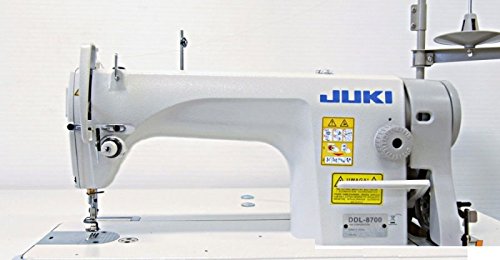
Professional seamstresses and industrial sewists will appreciate the JUKI DDL8700H’s remarkable 4,000 RPM speed and robust construction for heavy-duty materials. You’ll find it excels at handling tough fabrics like leather, jeans, and boat canvas with its powerful single-needle lockstitch system and 5mm maximum stitch length.
Note that this is a head-only unit – you’ll need to purchase the table and motor separately. The machine features a 3-row feed dog, adjustable presser foot lift from 5.5mm to 13mm, and auto-lubrication. It’s compatible with DB×1 needles ranging from #19 to #23, making it versatile for various heavy material applications.
Best For: Professional sewists and industrial workshops needing a reliable, high-speed machine for heavy-duty materials like leather, denim, and canvas.
Pros:
- Impressive 4,000 RPM maximum speed for efficient production
- Robust construction with versatile needle compatibility (#19-#23)
- Advanced features like auto-lubrication and adjustable presser foot lift
Cons:
- Table and motor must be purchased separately
- Significant weight at 74.8 pounds makes it less portable
- Not suitable for light or delicate fabrics
Janome MC6650 Sewing and Quilting Machine

The Janome MC6650 stands out as a powerhouse for quilters who need precision and versatility in their craft. With 170 built-in stitches and a generous 10″ flatbed, you’ll have plenty of space for large quilting projects. The machine’s 1,000 SPM speed lets you work efficiently, while six LED lights in three locations guarantee you’ll see every detail clearly.
You’ll appreciate the automatic features like the superior needle threader and thread cutter, making your sewing sessions more efficient. The one-push needle plate conversion and 12 included presser feet give you flexibility for different techniques. At 24.2 pounds, it’s substantial enough for stability yet manageable for transport.
Best For: Serious quilters and experienced sewists seeking a high-end machine with advanced features for large-scale projects and precise control.
Pros:
- Powerful 1,000 SPM motor with excellent speed control for both detailed and fast sewing
- Spacious 10″ flatbed and superior lighting system ideal for quilting projects
- Comprehensive set of automatic features including needle threader and thread cutter
Cons:
- Higher price point may not be justified for casual or beginner sewists
- Instruction manual could be more detailed and user-friendly
- Heavy weight of 24.2 pounds makes it less portable for sewing classes or groups
Factors to Consider When Choosing a Quilting Sewing Machine With Large Throat
When selecting a quilting machine with a large throat, you’ll need to evaluate several critical factors that impact your quilting experience. The machine’s throat space dimensions, motor power, stitch options, and overall frame construction quality will determine how effectively you can handle larger projects and intricate designs. Look for quilting-specific features like an extension table, adjustable presser foot pressure, and automatic thread cutting to enhance your quilting capabilities.
Throat Space and Dimensions
Serious quilters understand that throat space makes a significant difference in their sewing experience. When you’re working on larger quilts, you’ll need at least 8 inches of throat space to maneuver your fabric comfortably. Some premium machines offer up to 19 inches, giving you exceptional freedom to handle extensive projects without constant repositioning.
While searching for your ideal quilting machine, you’ll want to evaluate both the throat space and the machine’s overall dimensions. A larger throat area typically means a bigger machine, which affects portability. If you’re planning to take your machine to quilting classes or workshops, you’ll need to balance the benefits of a spacious throat with the practicality of transport. Remember that the machine’s width and height will impact your comfort during extended quilting sessions.
Motor Power and Speed
Since motor power directly impacts your quilting capabilities, choosing a machine with adequate wattage is essential for handling multiple fabric layers. You’ll want a motor that delivers at least 84 watts, though higher power ratings are better for tackling thick materials and preventing stitch irregularities.
Look for machines that offer speeds up to 4,000 SPM, but guarantee they come with adjustable speed controls. This flexibility lets you switch between rapid stitching for straight sections and slower, more controlled movements for detailed work. When evaluating motor specifications, consider both power and design quality, as these factors affect your machine’s durability and performance during demanding tasks like free-motion quilting. The right combination of power and speed control will help you maintain consistent stitch quality across various fabric thicknesses.
Built-in Stitch Options
A thorough range of built-in stitches can transform your quilting projects from basic to extraordinary. When selecting a quilting machine, you’ll want to look for one that offers an extensive selection of stitches, with options ranging from 165 to 600 different patterns. Pay special attention to machines that feature specialty quilting stitches designed for piecing, appliqué, and free-motion work.
Consider models that include multiple buttonhole styles and creative features like mirror imaging and stitch elongation. These capabilities will give you more flexibility in customizing your designs. If you’re planning to add personal touches to your quilts, look for machines with built-in lettering fonts. These allow you to incorporate names, dates, or meaningful text directly into your quilting projects, making each piece uniquely yours.
Frame and Construction Quality
Durability stands as a cornerstone when selecting a quilting machine with a large throat, making frame and construction quality essential considerations. You’ll want to focus on machines with metal frames, as they provide superior stability and minimize vibration during your quilting projects.
When evaluating construction quality, pay attention to the machine’s weight. Heavier models typically indicate a more robust build, which you’ll appreciate when working with bulky quilts. The frame’s strength becomes particularly important in machines with larger throat spaces, as they need extra reinforcement to handle increased material volume.
A well-built frame won’t just improve your quilting accuracy – it’ll also protect your investment by reducing wear on internal components. This means you’ll enjoy smoother operation and better performance throughout your machine’s lifetime.
Quilting-Specific Features Available
Successful quilting projects depend heavily on specialized features that set quilting machines apart from standard sewing models. You’ll want to look for a machine with free-motion capabilities and a drop feed feature, which lets you move your fabric freely in any direction while sewing.
A high-speed motor that can handle 1,000 stitches per minute or more will help you complete your quilting projects faster. You’ll also benefit from built-in decorative and quilting-specific stitches that allow you to create intricate designs. Don’t overlook the convenience of automatic features like needle threaders and thread trimmers – they’ll keep your workflow smooth and uninterrupted. These time-saving additions make a significant difference when you’re working on large, complex quilting projects.
Workspace Light Requirements
When working on detailed quilting projects, proper lighting becomes an essential factor in achieving professional results. You’ll want to guarantee your quilting machine includes built-in LED lighting that effectively illuminates your workspace. Look for models that provide bright, focused light directly on your sewing area to maintain accuracy and prevent eye strain during long quilting sessions.
Consider machines that offer adjustable lighting settings, as this lets you customize brightness levels based on your project needs and ambient lighting conditions. While built-in lights are important, you might need to supplement with additional task lighting like desk lamps or clip-on lights to eliminate shadows completely. The right lighting setup won’t just protect your eyes – it’ll help you achieve more precise stitches and intricate designs in your quilting work.