Whether you’re wrestling with thick denim, layering heavy upholstery fabric, or simply craving smoother stitches at a crawl, adding a speed reducer transforms your machine’s performance. This guide breaks down four top options—each designed to cut needle speed without sacrificing torque—so you can work through those tough seams with far less strain and breakage. Let’s see which pulley setup fits your setup.
| YEQIN Industrial Sewing Machine Clutch Motor Pulley (45mm) |  | Lightweight & Compact | Speed Reduction Ratio: Up to one-third rated speed (slow speed reduction) | Pulley Configuration: Single 45mm clutch motor pulley | Installation Location: Fits on clutch motor (universal 45mm fitting) | VIEW LATEST PRICE | Read Our Analysis |
| Cutex Speed Reducer (2″ and 6″ Pulley) for Industrial Sewing Machines |  | Best Value | Speed Reduction Ratio: Approximately one-third of rated speed | Pulley Configuration: 2-inch and 6-inch pulleys | Installation Location: Mounted beneath sewing machine table, between handwheel and motor pulley | VIEW LATEST PRICE | Read Our Analysis |
| Teamwork Speed Reducer 3-Pulley for Industrial Sewing Machines |  | Best Torque | Speed Reduction Ratio: One-half or one-third of rated speed | Pulley Configuration: 3-inch, 6-inch, and 9-inch pulleys (3-pulley system) | Installation Location: Between handwheel and motor pulley | VIEW LATEST PRICE | Read Our Analysis |
| Speed Reducer (2″ and 6″ Pulley) for Industrial Sewing Machines |  | Heavy-Duty Standard | Speed Reduction Ratio: Approximately one-third of rated speed | Pulley Configuration: 2-inch and 6-inch pulleys | Installation Location: Beneath sewing machine table, between handwheel and motor pulley | VIEW LATEST PRICE | Read Our Analysis |
More Details on Our Top Picks
YEQIN Industrial Sewing Machine Clutch Motor Pulley (45mm)
If you’re a home sewist upgrading your industrial machine, this pulley is your lightweight & compact solution for speed control. At just 0.04 kg, the YEQIN 45mm clutch motor pulley lets you dial down your stitching pace without changing your motor. It’s a durable metal part built for universal fit on industrial machines. And with a 4.5 star rating from 296 reviews? You’ve got solid proof it works. Need slow, steady feeds for tricky fabrics? This pulley delivers. Just swap it on, and you’ll instantly tame your machine’s speed. No fuss. No heavy hardware.
- Speed Reduction Ratio:Up to one-third rated speed (slow speed reduction)
- Pulley Configuration:Single 45mm clutch motor pulley
- Installation Location:Fits on clutch motor (universal 45mm fitting)
- Intended Application:Industrial sewing machines (universal fit)
- Key Benefit:Slow speed reduction for precise control
- Item Weight:0.04 kg
- Additional Feature:Universal 45mm diameter fit
- Additional Feature:230-volt operation
- Additional Feature:Compact 0.04 kg build
Cutex Speed Reducer (2″ and 6″ Pulley) for Industrial Sewing Machines
The Cutex Speed Reducer is a smart value pick for anyone sewing heavy materials like leather or upholstery. It mounts under your table, connecting between the handwheel and motor pulley. Using its 2 and 6-inch pulleys, it drops your speed to about one third of the machine’s rating, giving you precise stitch control and extra torque for tough jobs.
Just a heads up: installation requires some customization. You’ll need to adjust the belt slot in your table, and you must supply your own V-belts since they aren’t included. Plus, you may need a longer or differently sized belt. It’s a straightforward DIY project, though!
Weighing only 3 pounds, this white reducer packs a punch. Rated 4.2 stars from 51 shoppers, it’s a solid, affordable option for smoother sewing. Or, skip the hassle and check out our next pick!
- Speed Reduction Ratio:Approximately one-third of rated speed
- Pulley Configuration:2-inch and 6-inch pulleys
- Installation Location:Mounted beneath sewing machine table, between handwheel and motor pulley
- Intended Application:Heavy-duty leather or upholstery sewing
- Key Benefit:Enhanced torque for demanding tasks
- Item Weight:3 pounds
- Additional Feature:White color finish
- Additional Feature:Belt slot table modification
- Additional Feature:Requires additional V-belts
Teamwork Speed Reducer 3-Pulley for Industrial Sewing Machines
For heavy-duty stitchers wrestling with leather or upholstery, the Teamwork Speed Reducer 3-Pulley (part #SR2) delivers torque that punches far above its weight class. You install it between the handwheel and motor pulley, and with three pulleys (3″, 6″, 9″), you slash your machine’s speed to half or a third of standard. That’s perfect for thick material, giving you precise stitch control without the machine stalling.
And here’s the kicker: it measures just 5 x 2 x 5 inches, so it’s compact yet mighty. You’ll need custom belts for installation, but the payoff is smoother, more powerful sewing. It’s a best seller for a reason, rated a perfect 5.0 stars from two verified users. If you find a lower price elsewhere, you can report it to keep things competitive. For tough jobs, this is your quiet workhorse.
- Speed Reduction Ratio:One-half or one-third of rated speed
- Pulley Configuration:3-inch, 6-inch, and 9-inch pulleys (3-pulley system)
- Installation Location:Between handwheel and motor pulley
- Intended Application:Heavy-duty applications such as leather or upholstery sewing
- Key Benefit:Increased torque and improved stitch precision
- Item Weight:Not specified (dimensions: 5 x 2 x 5 inches)
- Additional Feature:Triple pulley sizes (3″, 6″, 9″)
- Additional Feature:Compact 5 x 2 x 5 inch footprint
- Additional Feature:Recently listed December 2023
Speed Reducer (2″ and 6″ Pulley) for Industrial Sewing Machines
You’re hunting for a way to tame a beast of a sewing machine, and this speed reducer is your heavy-duty standard for leather or upholstery work. It mounts under the table, linking handwheel to motor pulley, and its 2″ and 6″ pulleys slash your speed to one-third while jacking up torque. That’s real control for thick hides or layered fabric, not just a luxury.
- Dimensions: 6.3” deep, 14.37” wide, 10.63” tall, and a solid 3.5 pounds.
- Installation: You’ll need your own belts—they’re not included. Plan for custom fit; widening the table’s belt slot is common.
- Power: Runs on electric, metal construction, built for the long haul.
This isn’t a plug-and-play gadget; it’s a professional upgrade. But for precise stitches on demanding jobs, nothing else matches its blend of slow-and-strong. Check manufacturer warranties for peace of mind, and you’re set.
- Speed Reduction Ratio:Approximately one-third of rated speed
- Pulley Configuration:2-inch and 6-inch pulleys
- Installation Location:Beneath sewing machine table, between handwheel and motor pulley
- Intended Application:Heavy-duty leather or upholstery sewing machines
- Key Benefit:Increased torque and better stitch control
- Item Weight:Approximately 3.5 pounds
- Additional Feature:Large footprint (14.37 x 10.63 inches)
- Additional Feature:Electric power required
- Additional Feature:2024 manufacturing year
Factors to Consider When Choosing a Speed Reducer for Sewing Machine
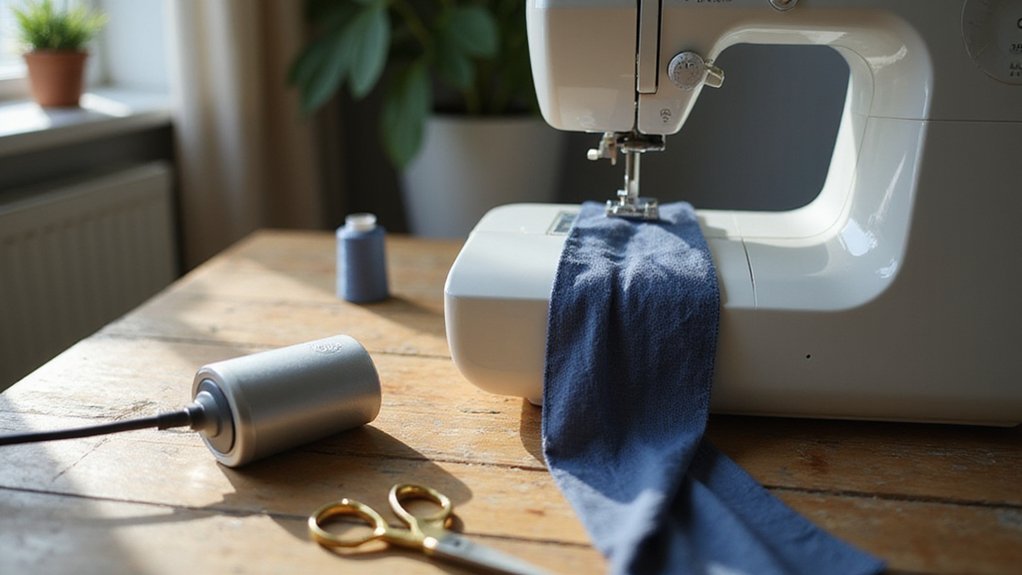
When choosing a speed reducer, you need to think about precision and stitch control, especially if you’re working on intricate patterns. For heavy materials, torque is essential because a reducer that can’t handle the load will just stall out on you. And don’t forget motor power compatibility, pulley size and ratio, and the installation space you have available those are all critical to getting a smooth fit.
Precision and Stitch Control
Getting the stitch quality you’re after often comes down to one simple thing: how much control you have over that needle’s rhythm. A speed reducer directly enhances precision by cutting your machine’s top speed, so you can tackle delicate details without racing ahead. You’ll notice fewer thread breakages and skipped stitches, because you’re no longer fighting against momentum. Lower speeds also dampen vibrations, giving you a steady hand for consistent stitch appearance. For dense materials like leather or upholstery, that fine control lets you guide fabric smoothly, maintaining accurate stitch length and tension. It’s not just about going slow; it’s about balancing speed and torque so every stitch lands exactly where you want it. That’s the real secret to effortless, professional results.
Torque for Heavy Materials
Two forces matter most when you pick a speed reducer for heavy materials: raw torque and how smoothly that torque reaches the needle. Leather, upholstery, or multiple denim layers punish weak machines, causing skipped stitches or snapped threads. A reducer multiplies your motor’s pulling power, so you push through dense stacks without stalling. Mount it between the handwheel and pulley, and you’ll gain that extra grunt precisely where you need it. You also get slower, deliberate needle penetration, which is your best friend for controlling thick seams. Here’s what that torque buys you:
- Consistent stitch formation, even under heavy load
- Less motor strain, meaning less heat and wear
- Fewer broken needles from sudden resistance
Sew confidently through tough stuff; the machine won’t fight you.
Motor Power Compatibility
So, how do you make sure your speed reducer won’t let the smoke out? You match it to your motor’s power, plain and simple. First, check the horsepower or wattage ratings on both units; they need to align, or you’ll either stall the needle or fry the windings. Don’t guess, because mismatched numbers are a recipe for a dead machine.
Next, verify the voltage. A 120V motor needs a 120V reducer, no exceptions. And pay attention to the current draw, measured in amps. Your reducer must handle that electrical load continuously without overheating. If it’s rated lower, you’re asking for trouble.
Finally, check the manufacturer’s guidelines for your specific motor type. They’ll tell you the exact power range that’s safe. You’re not looking for a universal fit; you’re looking for a precise, documented match. Get that right, and your motor stays cool, your stitches stay even, and you’re not shopping for a new machine. That’s the whole game.
Pulley Size and Ratio
After you’ve nailed down the motor power match, the next thing you’ll play with is the pulley size, and that’s where the real tuning happens. Bigger pulleys, like a 6-inch or 9-inch diameter, give you a higher ratio for serious speed reduction, perfect for tackling thick materials. A 6:1 ratio, for instance, slows things way down but demands precise belt alignment and tension. Common sizes range from 2 inches to 9 inches, and you’ll need to match your motor and machine pulley diameters for ideal torque transfer. That adjustment doesn’t just affect speed; it boosts your control and your machine’s ability to power through tough fabrics. So, pick a size that balances that slowdown with smooth, reliable performance.
Installation Space Required
One major factor that often gets overlooked until it’s too late is the physical footprint of your speed reducer setup. You’ll need real clearance beneath or around your sewing table, so grab a tape measure and check height, width, and depth against the unit’s specs. Don’t forget the pulleys—they add bulk you might not expect. Also, think about access: you want enough room to reach the reducer for maintenance and belt swaps without contorting yourself. And account for the space needed for tools during installation, plus any table or frame modifications required. Before committing, verify your existing setup can handle the weight and mounting demands for a secure fit. Measure twice, install once, and you’ll avoid a cramped, frustrating workspace.
Belt Type and Adjustments
Why does belt type matter so much for your speed reducer? Because it’s the direct link between motor and machine, and picking wrong means wasted torque or frustrating slippage. You’ll typically choose between a V-belt, which grips tighter for heavy fabrics, or a flat belt for quieter, smoother operation. Don’t assume one size fits all; measure your pulley depth first.
Adjusting tension is non-negotiable. Too loose, and the belt slips mid-stitch; too tight, and you strain the motor. Aim for about a half-inch of give when pressing down firmly. You might also need to swap belt length or width for your specific model, so check your manual’s specs. And make a habit of inspecting belts monthly, because a worn edge quietly ruins your speed consistency before you even notice.
Build Quality and Durability
Two things matter most when you’re picking a speed reducer for your sewing machine: the materials it’s built from and how precisely those parts are made. You want heavy-duty metal construction, not flimsy plastic that’ll crack under pressure. That’s non-negotiable for demanding projects. Precision machining minimizes vibrations and keeps your stitches smooth, even at slow speeds. And robust design prevents mechanical failures that can halt your work or lead to costly repairs.
Look for reducers that feel solid in hand, with tight tolerances and no wobble. A durable unit maintains consistent performance over time, so you’re not replacing it every season. It handles heavy fabrics without skipping a beat or fatiguing the motor. Essentially, you’re investing in longevity: a well-built reducer stays quiet, steady, and reliable through thousands of seams. Skip the cheap options they just won’t last.
Speed Reduction Versatility
Beyond the durability that keeps a reducer running season after season, what you really want is a unit that bends to your will across different projects. You need versatility in speed reduction, not just one fixed ratio. Look for options that let you halve or third your machine’s original speed. Why? Because lightweight fabrics demand slow, deliberate stitching, while heavy duty leather might need more power but less pace.
Different pulley sizes give you customizable gear ratios. A 2 inch pulley offers fast work, but a 6 or 9 inch version dials it way down for precision. Variable reduction ratios mean you’re not locked into a single approach. You get adaptable control for everything from delicate silk to rugged canvas.
Plus, flexible installation matters. Adjustable belt configurations let you swap setups without hassle. So, prioritize a reducer with adjustable speed control: it optimizes performance for both delicate embroidery and heavy stitching without compromise!